
Your cobot does the work—your team focuses on what matters most

Machine loading, machine unloading, joining processes, post-processing tasks—ideal for cobots

Machine loading is one of the most common and rewarding cobot applications: repetitive, cycle-time-critical, and physically demanding for employees. This is exactly where collaborative robots provide immediate and measurable relief.

Whether it’s a press brake, a milling machine, an injection molding machine, or a turning center—we automate loading and unloading processes with Jaka cobots: no safety fence, no costly modifications, and no long implementation time.

As a Jaka integrator for the DACH region, we support you from the initial request through CE certification—all under one roof.
Typical Use Cases — What We Automate

As a cobot integrator, we implement complex tasks in a solution-oriented manner
  • Bending bench / press brake: Load the blank, start the bending process, remove the bent part, and stack it—even with varying sheet metal sizes and smaller batch sizes.
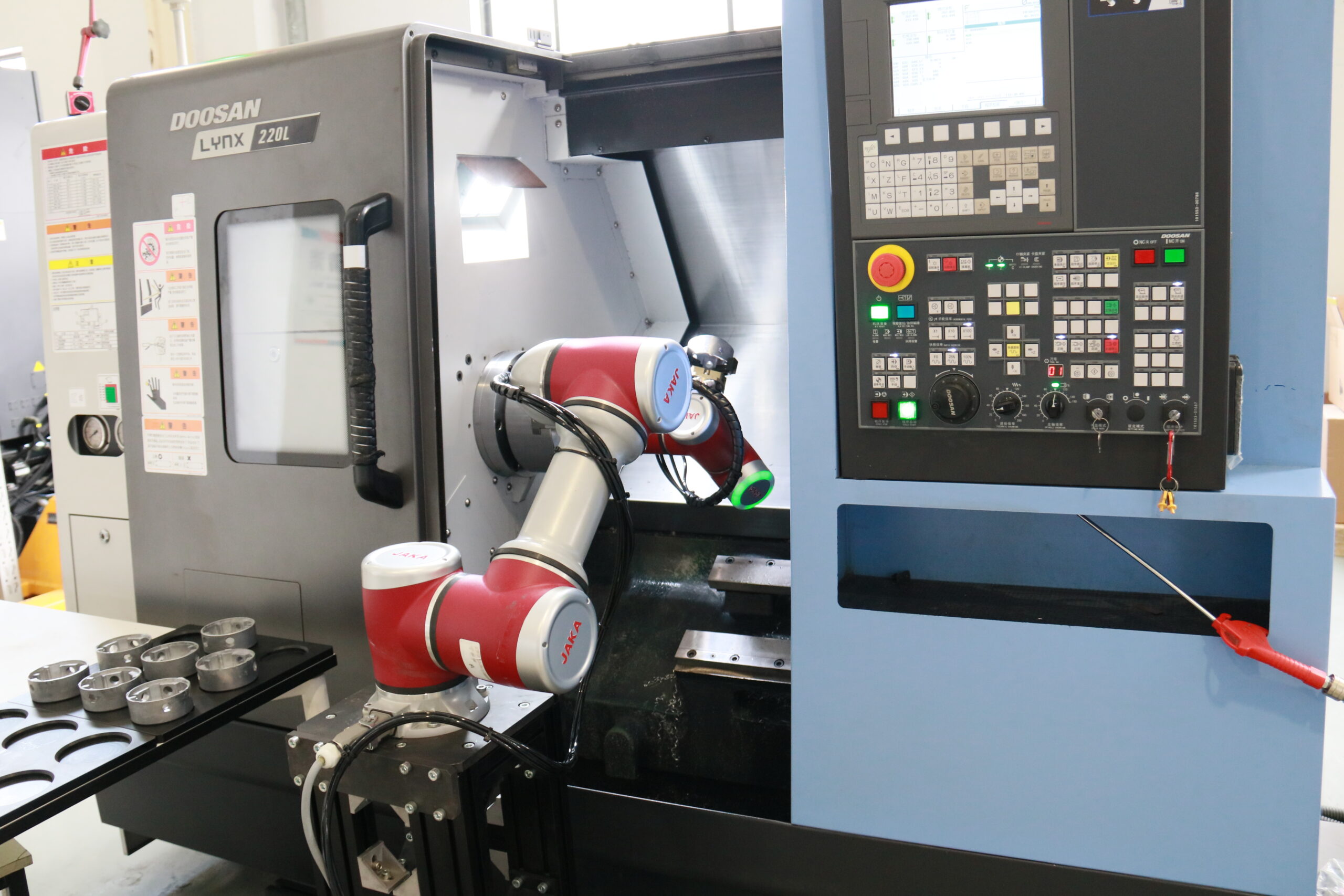
  • CNC milling and turning machines: Remove the blank from the magazine, place it in the chuck, start the machining process, remove the finished part, and set it aside—around the clock, even at night.
  • Injection molding machines: Removing and placing plastic parts—the cycle is controlled by the machine controller via the Euromap protocol.
  • Measuring machines and test stations: Automatically feed parts, trigger measurements, and sort by pass/fail. Automatically generate the 3D scanner’s trajectory.
  • Multi-stage process chains: A cobot operates multiple machines in sync—milling, deburring, washing, and measuring in sequence.
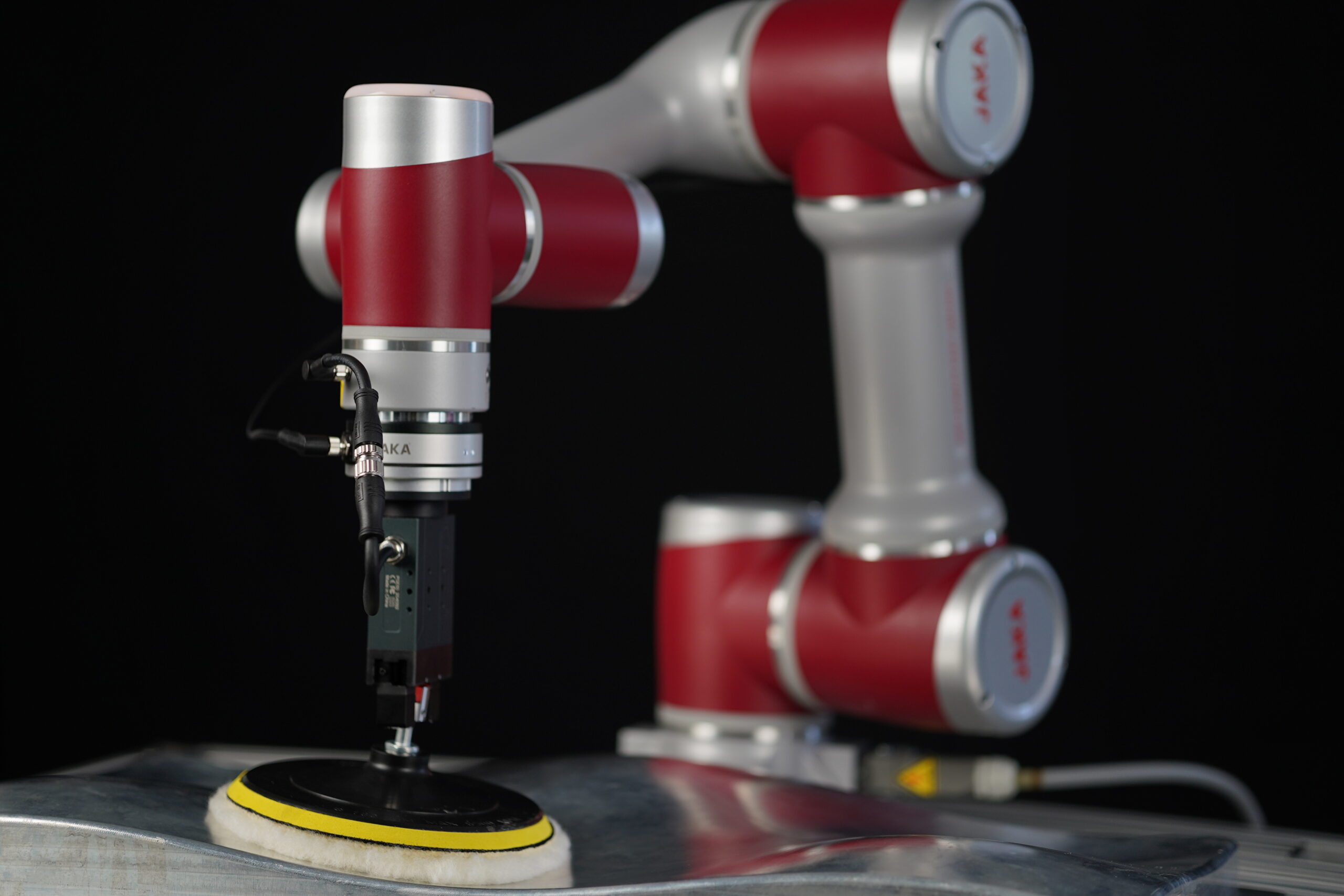
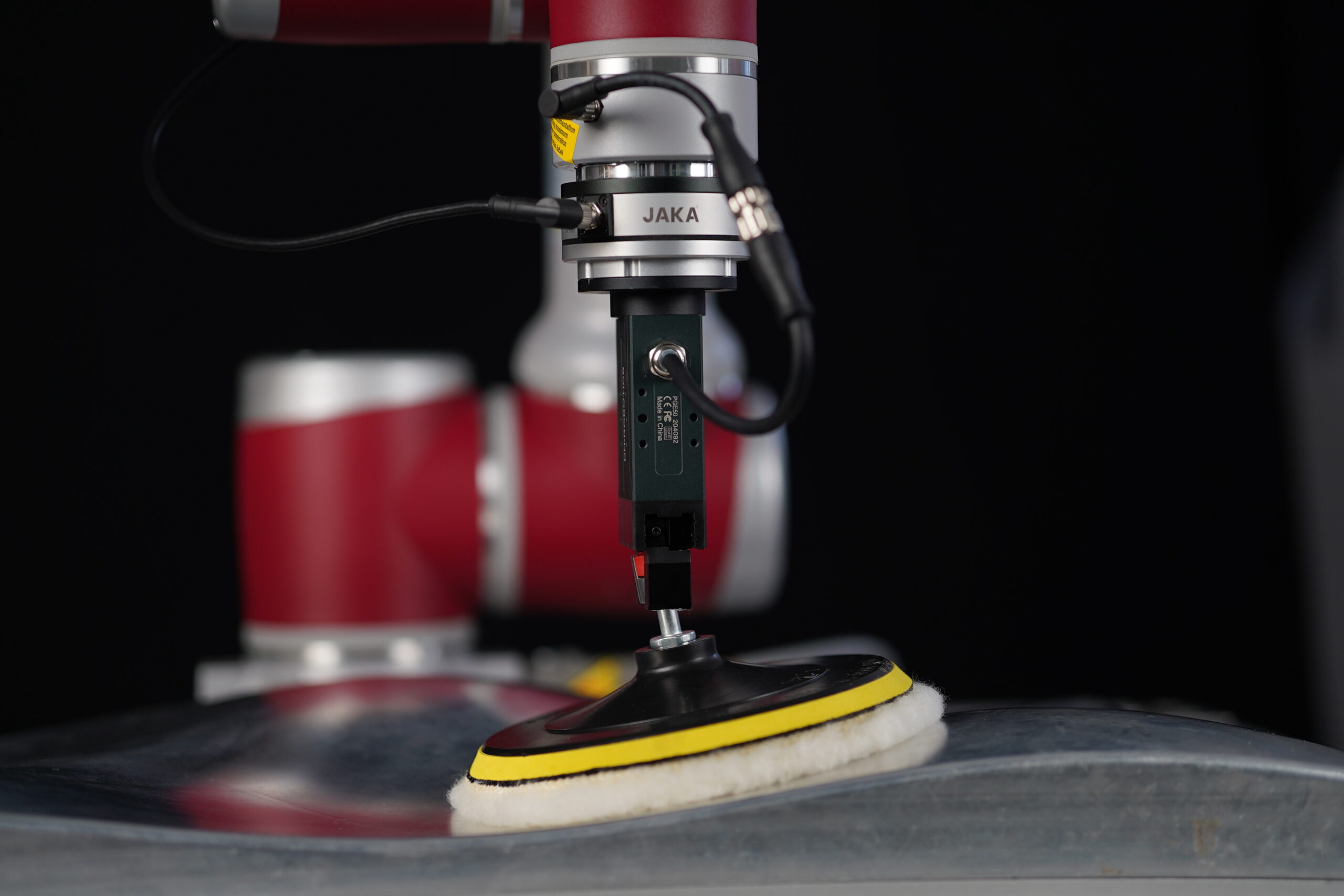
  • Use collaborative robots to perform post-processing operations such as spraying, powder coating, painting, and dipping.
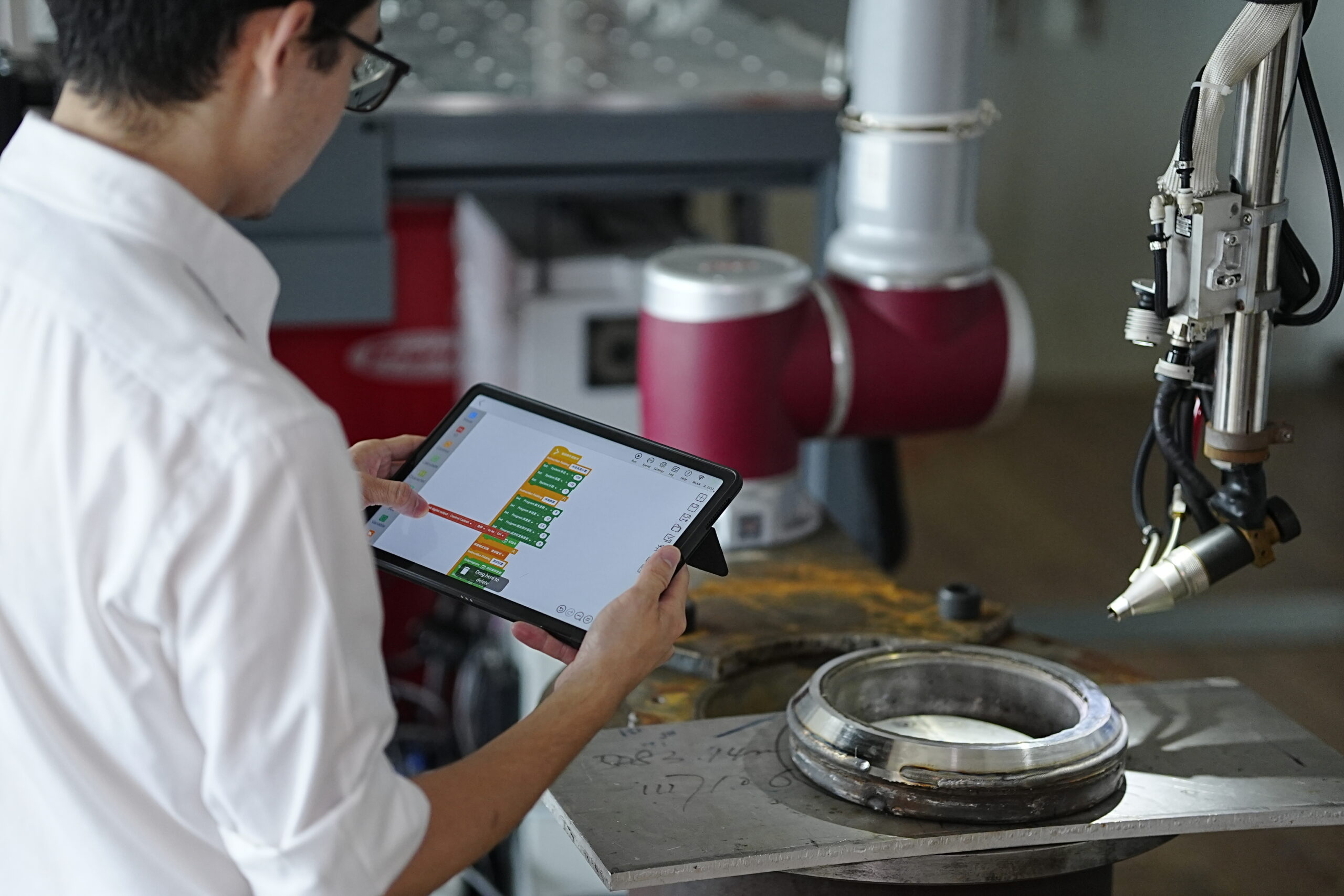
  • Flexible small-batch production: quick changeovers to new parts via a simple teach-in process — ideal for contract manufacturers dealing with a wide variety of parts.
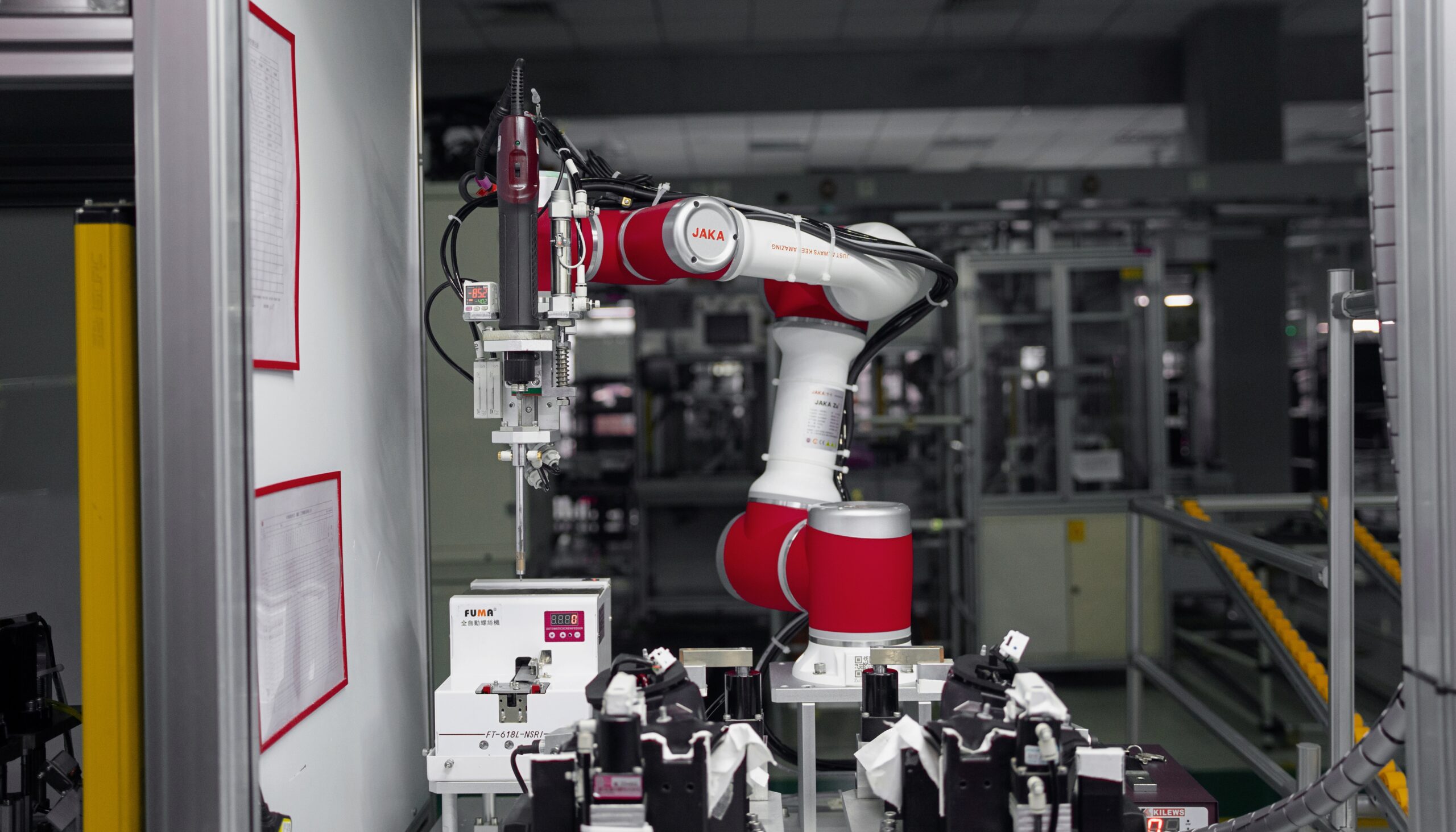
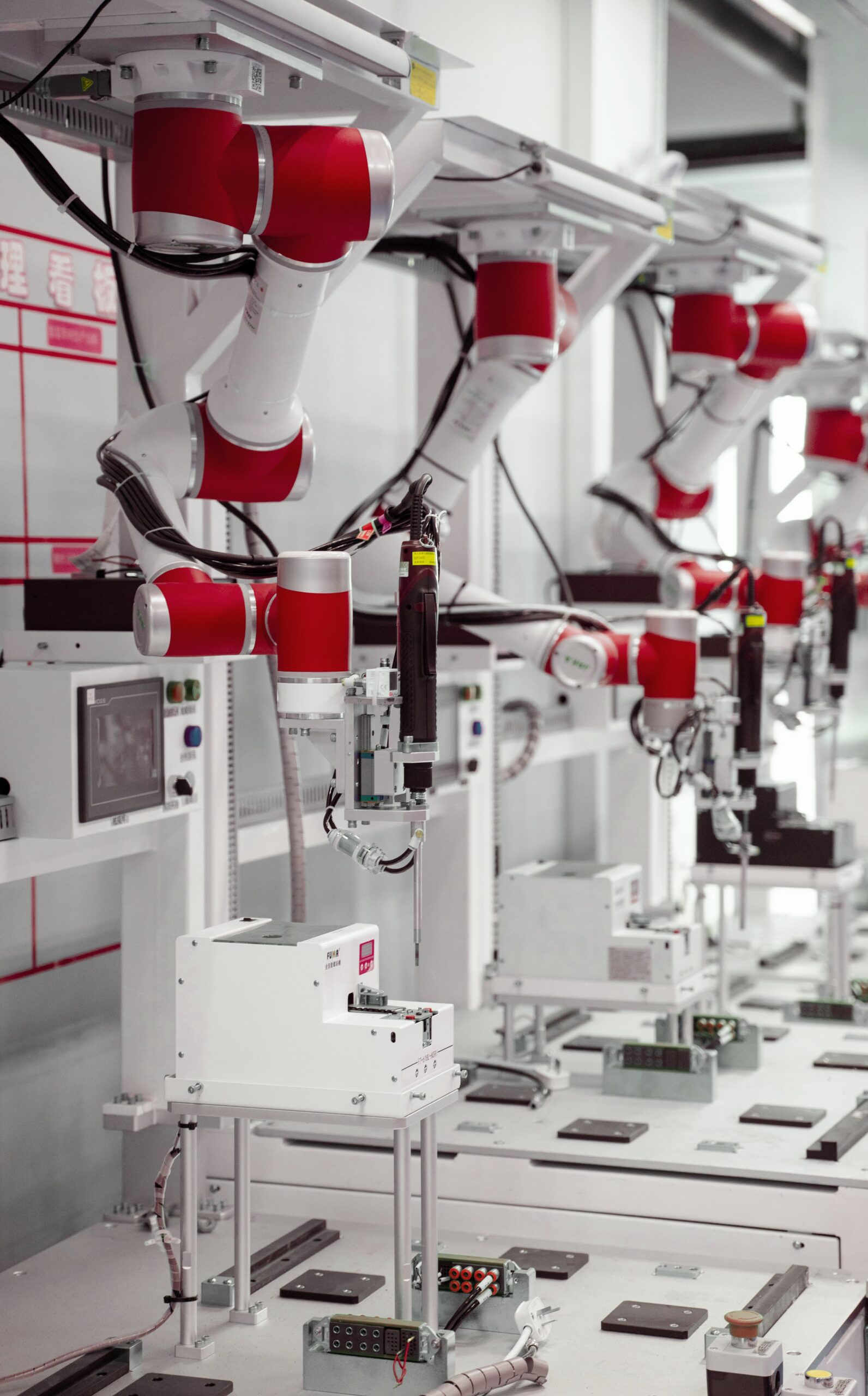
Jaka Cobot Loading Machinery in a Production Environment
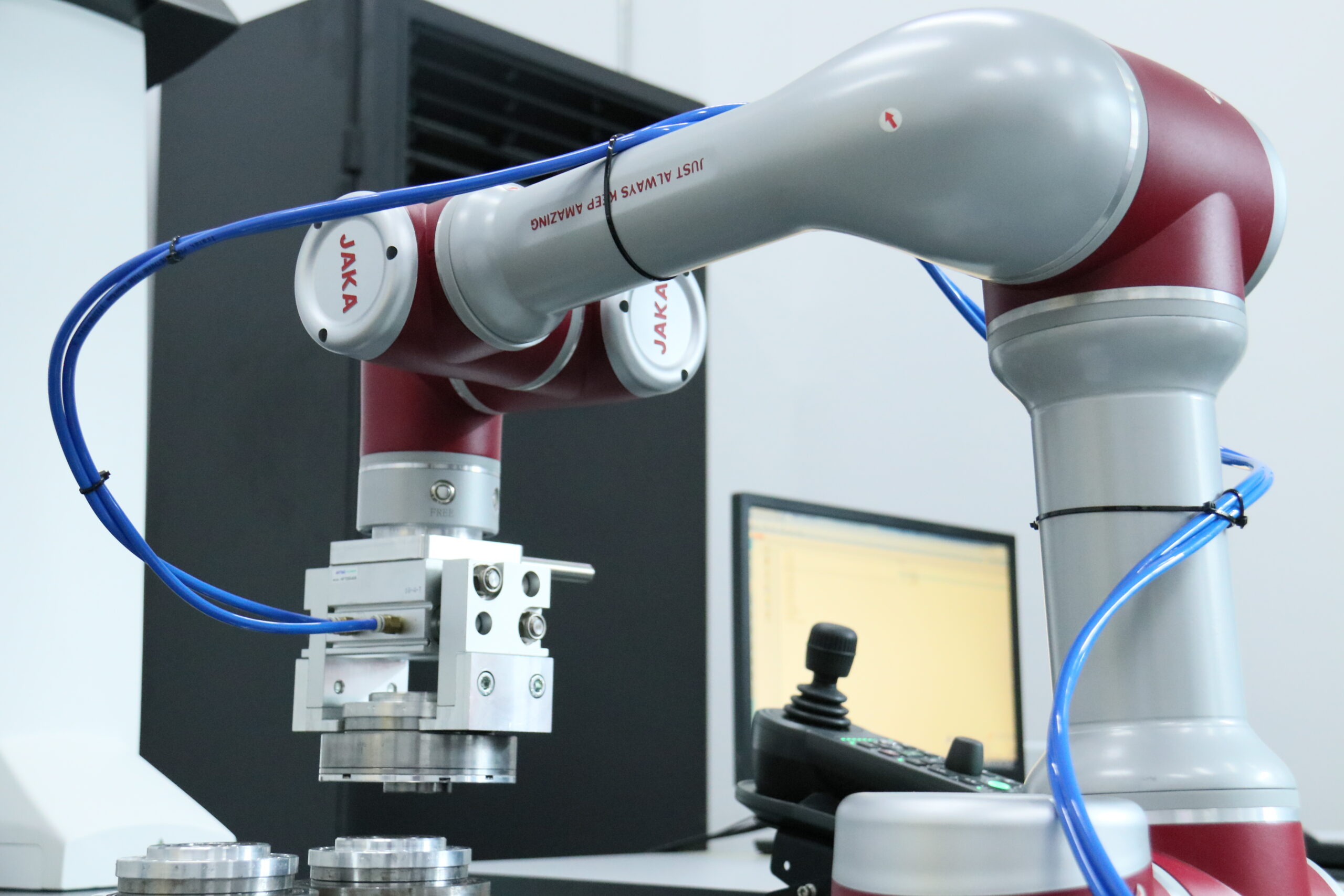
Cobot Arm Picks Up Workpiece for Machine Loading
Cobot Integration in a Manufacturing Cell Without a Safety Fence

What You'll Gain — Concrete and Measurable

A fully or partially automated process is within reach!
  • Higher machine utilization: The cobot continues to load parts even during breaks, shift changes, and overnight.
  • Employees for higher-value tasks: Moving away from repetitive assembly toward quality control, setup, and programming.
  • Shorter cycle times: consistent gripping speed without fatigue; optimal transfer positions defined in advance through simulation.
  • Flexibility instead of rigidity: It takes just minutes to retool a cobot—no cell reconfiguration, no tool changes.
  • No safety fence required: Jaka cobots are MRK-certified according to ISO 10218 and TS 15066.
  • Full CE compliance: Risk assessment, safety concept, and CE documentation included.
Simulation of a Cobot System Before Commissioning
Component Placement, Circuit Boards, Raw Materials, CNC Machine, Press Brake

Application Example — Cobot at the Press Brake

Task: A contract manufacturer in Germany loads a press brake manually—an employee loads the blanks, starts the bending process, and removes the finished sheet metal. The process runs in two shifts; the night shift remains unused.

Solution: Jaka Zu12 cobot with adapted vacuum grippers for varying sheet metal formats. Teach-in for three standard parts in half a day. Integration with the machine control system (Trumpf) via digital I/O and a small but effective workaround.

Result: Machine utilization increased from 65% to 90%. Unmanned night shift. Employees retrained from assembly to quality control and setup.

Our Process — From Requirement to Operational System

  • Requirements Analysis: You describe your process to us—we’ll help you create a structured requirements specification. A phone call or an on-site meeting is also a good way to get started.
  • Concept and Simulation: We develop the process flow, select hardware and grippers, and simulate the system in advance—collisions and cycle times are identified and resolved in the digital model.
  • Offer: A binding offer is made only after both parties are certain that nothing has been overlooked. No surprises during the course of the project.
  • IT Integration: Early integration with your control system, MES, or ERP—so that the cobot becomes part of your data flow.
  • Safety Concept: Risk assessment in accordance with ISO 12100 and ISO 13849. Human-machine collaboration (HMC)-compliant operation without a safety fence wherever possible.
  • On-site commissioning: Setup , run-in, and teach-in at your location. Training for your employees included.
  • CE Certification: Turnkey delivery with CE marking, a declaration of conformity, and complete documentation.
Cotot by Jaka with an 18 kg payload and a 1.8 range

Why Jaka Cobots — and why Phanos as an integrator

  • Jaka Cobots: compact design, integrated force and torque sensors in all joints, easy teach-in, payload 3–30 kg — ideal for machine tending in confined production cells.
  • Phanos as an integrator: not a large corporation with lengthy decision-making processes—you speak directly with the engineer who designs your system.
  • Experience in the DACH region: short payback periods, high part variety, limited floor space—we understand the challenges faced by small and medium-sized contract manufacturers.
  • A strong network of long-standing automation providers: simulation, gripper selection, control system integration, CE certification — general contracting with centralized planning across various suppliers.

Frequently asked questions

.

Is a cobot worth it even for changing parts or small production runs?

Yes—that’s where cobots have an edge over traditional industrial robots. Teaching a new part typically takes 30–60 minutes. They’re particularly well-suited for contract manufacturers dealing with a wide variety of parts.

Do I need a protective fence?

In most machine-tending scenarios, no. Jaka cobots are capable of collaborative robot operation (MRK) and work alongside humans in compliance with standards. The exact configuration depends on the risk assessment—we’ll clarify this during the project.

How much does it cost to set up a cobot machine?

A typical system (cobot, gripper, control integration, commissioning, CE) costs between CHF/EUR 40,000 and 90,000 — depending on complexity. Payback period typically ranges from 12 to 24 months. A binding quote will be provided following a requirements analysis.

Can the cobot be connected to the machine controller?

Yes — Jaka Cobots communicate via digital I/O, Profinet, EtherNet/IP, and OPC UA. Even older machines without a dedicated interface can be connected using signal converters.

How long does a project take?

Typically 8–16 weeks for a standard application. We will provide a realistic timeline after the requirements analysis.

Liefern Sie auch die CE-Dokumentation?

Yes—as a system integrator, we provide CE marking, a declaration of conformity, and complete technical documentation.

How can we implement your next project? One customer reports.

Please read what one customer has to say about our 3D scan-to-CAD services

(please scroll down on the next page)